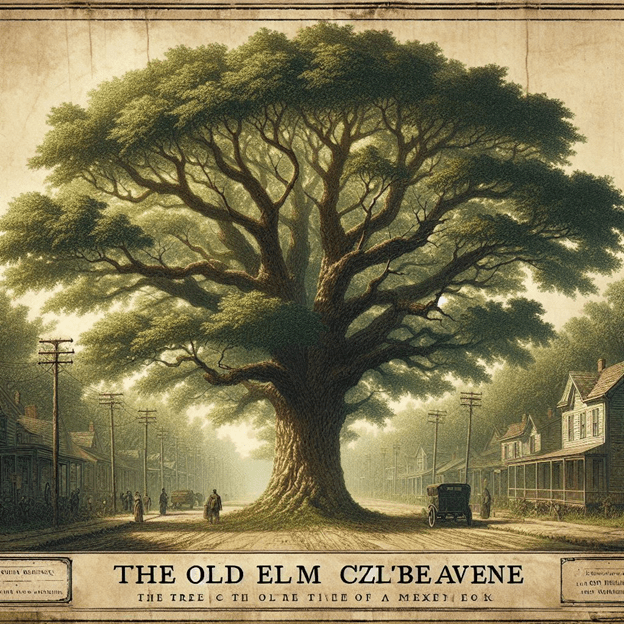
Ah…. That 1962 sunshine, radiant and warm, poured down from a sky so blue it seemed limitless. Captured in a snapshot, it was a memory of light pressing against the edges of that moment. There was a hint of a lazy afternoon, with shadows stretching languidly across the grass, and the air carrying the scent of distant things growing, things forgotten since. Children laughed and played, their voices rising like birds, while bicycles lay strewn about in casual abandonment, wheels glinting in the sun. Somewhere, a radio played, a soft murmur, trailing off into the day. The world was vast and new yet tinged with the nostalgia only time can bring. How bright those days seemed, with colors so vivid they appeared painted; how endless they felt, caught forever in that year. The 1962 picture on the top you could see the branches of the old Elm tree sky high. A large canopy like all forest canopies. It was just as large. In 1852 it was just as prevalent and served as a beacon and refuge. It was a watchtower for the Underground Railroad, a sentinel against the sky. There, under its sprawling branches, farmer Ellis Clizbe worked tirelessly, his bed and breakfast house a station for countless souls reaching for liberty. By the light of a single lamp, shadows gathered, and whispers of hope pulsed beneath the stars. Night after night, courage bloomed beneath those leaves, hearts defying the tight grip of fear. Ellis Clizbe and his family risked much, knowing the cost, yet guided the way, their conviction as vast as the horizon. Beneath the protection of that tree, many African Americans found the first breath of promised freedom, the air filled with the sweetness of expectancy and dreams taking flight. Under its shade, a meeting house and school were located. By 1782, the mighty Elm was already a landmark, a part of the landscape for generations. It remained entrenched and firmly rooted in the same soil for centuries, a towering creature among the other giants in the old growth forest. Through its watchful presence, it bore witness to the first European settlers’ arrival in the area as they ventured into this wild and untamed land. The newcomers came with dreams of new beginnings, bringing plows and seeds to start farms and transform the wilderness into fields of promise. Determined to carve out a future from the vastness around them, pioneers and their families worked tirelessly, urging the land to yield to their new vision of a life and shaping it to their needs. The years shortly after the Revolutionary War saw these early trails bring more settlers who were eager to define their freedom through ownership of the land and the sweat of their brows. It is where Ellis’s father came to make a gristmill. In 1662, it was a mere sapling on the grounds of an ancient forest. This fledgling Elm was one among many in a dense canopy that had flourished since the last Ice Age, each tree a witness to ages unfolding in the vast wilderness. Before towering giants surrounded it, the Elm began its long growth, stretching slowly toward the light, a tender part of a landscape largely unchanged for thousands of years. In 1670, only a few years later, the young tree bore witness to the rumble of footsteps as the French Carignan-Salières Regiment marched southward, their presence a sudden disturbance in the ancient stillness. De Tracy led the company on a winter expedition, seeking to extend their influence and control. They pushed through the snow and cold, passing the tree on their march to the Village of the Mohawks, eager to claim the new land for France. In the spring of 1677, the young Elm stood as a sentinel, witnessing the hurried steps of Saint Kateri Tekakwitha as she fled North. With her was the Catholic priest Father Jacob and a warrior called Hot Ashes. Their path took them along the Chuctanunda Creek, moving silently and swiftly in the shadows of midnight, their breath clouding in the chill night air. In flight from a Mohawk village where Kateri faced oppression, a faith she could not embrace, and a marriage she did not want, they were resolute in their escape. The Elm marked their journey as Kateri sought refuge at the Jesuit settlement of Kahnawake, leaving behind a life of turmoil for the promise of spiritual liberty. Through the darkness, the tree’s looming presence guided them onward while the distant sounds of pursuit faded, and hope filled the void. Kateri’s determination was as unyielding as her footsteps; she and her companions pushed forward tirelessly, the creek their only companion, the young tree a distant memory reaching skyward in the tangled forest. But by 1972. It was gone. The victim of the Chinese Elm disease that destroyed much of the American Elm trees.
This is the story of this tree.
Discover more from Site Title
Subscribe to get the latest posts sent to your email.
