3-Ddays
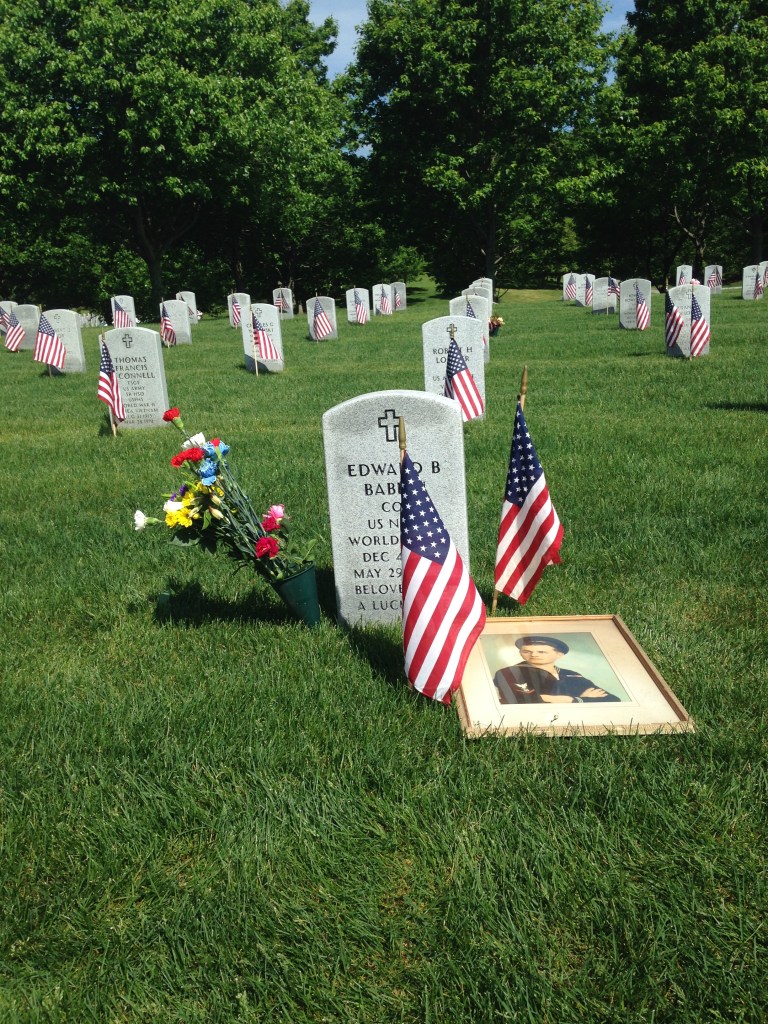
The rain in Normandy does not wash things clean; it only makes the gray of the limestone turn to the color of a bruise. I stood on the edge of the dune, clutching the leather-bound journal my father had kept in 1944. The ink was iron-gall, faded to the brown of dried blood, the cursive script jagged and impatient. He hadn’t written a memoir; he’d kept a ledger of survival. Coordinates 49.34 North, 0.54 West. Wind heavy. Gear weight: 62 pounds. The sound of the surf is not water, but grinding teeth. I had spent three days pacing the stretch of sand between Colleville-sur-Mer and Vierville, trying to calibrate my own boots to his invisible stride. My father had never talked about these beaches, not in the way the local museums tried to talk about them. He had kept his silence like a locked room in our house in Upstate New York—a room I spent twenty years trying to pick the lock on, convinced that if I could just find the right angle of light, the right coordinate, I would understand the stoic, tired man who sat in our recliner with a lukewarm beer, staring at the middle distance. I looked down at the paper map folded inside the journal, its edges crumbling like burnt toast. I was standing within twenty feet of where he had waded ashore. The geography was wrong, of course. Time had eroded the cliffs, and the commercial tide had swept away the debris of history. There were no ghosts here, all the spirits rest comfortably, all counted, all remembered. Only the sharp, persistent wind and the sound of my own breath—a frantic, rhythmic intake of air that felt far too thin for the gravity of the place. I walked toward the water line. The sand was slick, holding the memory of the tide. I tried to visualize the landing craft—the metal ramp dropping like a guillotine—but the image wouldn’t hold. It was too cinematic, too clean. My father’s reality hadn’t been a wide-angle shot of valor; it had been the claustrophobia of wet wool, the smell of cordite and vomit, and the crushing, animal need to keep moving because stopping meant disappearing. I crouched down, digging my fingers into the cold, wet grit. I wanted a relic. A piece of rusted shrapnel, a uniform button, something to anchor this intellectual pilgrimage to the physical weight of his suffering. But there was nothing. Only the smooth, indifferent pebbles of a beach that had long ago finished digesting the war. Why did I think I could find you here? I whispered to the wind. The question felt small. It felt pathetic. I had spent my life studying the “abroad” of others—the postcards from Mar, the stories of Jack, the effortless grace of people who seemed to own the world—while my own history felt like a debt I was still paying off. I had come to Normandy thinking that the trauma was geographic, that if I stood exactly where the trauma had been inflicted, I could somehow inherit it, master it, or at least file it away into a neat category of “understanding.” Instead, I felt a hollow, aching inadequacy. I was a man in a Gore-Tex jacket, staring at a patch of gray water, playing at being a witness to a horror I had only ever read about in books with glossy covers. I was a tourist of my own father’s wreckage. I stood up, my knees aching from the damp. I looked back toward the dunes, where the modern world was beginning to encroach. A line of tour buses pulled into the parking lot, their air brakes hissing like snakes. People in bright colors spilled out, clutching selfie sticks and maps, their voices carrying over the surf—loud, cheerful, and profoundly unburdened. They were here for the “experience.” They were here to check a box. I felt a sudden, sharp spike of resentment, followed immediately by a wave of nausea. Who was I to judge them? I was here for the exact same reason, just with a more pretentious objective. I had brought the journal, the reverence, the heavy, self-important burden of the “son seeking answers,” but in the end, I was just another body occupying space on a beach that didn’t care who I was or why I had come. My father’s silence hadn’t been a puzzle to be solved. It had been a wall he had built, brick by brick, to keep the war from bleeding into the living room. He didn’t want me to understand the beach. He didn’t want me to walk the coordinates. He wanted me to be somewhere else entirely—somewhere safe, somewhere dull, somewhere where the most important thing to worry about was the quality of the coffee or the weather for the weekend. I opened the journal one last time. There was a smudge of oil on the page, right over the date. June 6th. I traced the smudge with my thumb. He hadn’t been a hero in his own mind; he had been a man who had survived a catastrophe and then spent the rest of his life trying to un-see it. By coming here, by obsessively mapping his path, I wasn’t honoring him. I was excavating his scars. I was forcing him to relive it in the only way I knew how: through my own vicarious, grasping desire for connection. I looked at the water—the English Channel, gray and churning, a literal border between one world and another. My father had crossed it and never truly come home. He had been “tethered to a small, threadbare place,” just like me, but he had arrived there carrying the weight of a thousand miles and a thousand deaths. I closed the book. The leather was cold against my palm. The exhaustion finally settled into my marrow, a heavy, leaden thing that silenced the inner monologue. There was no revelation coming. There was no ghost to hold, no secret handshake to bridge the gap between his war and my peace. There was just the tide, the wind, and the realization that his trauma was his own, private property—a legacy he had protected by keeping it to himself, and a legacy I was finally, mercifully, going to stop trying to steal. I turned away from the shoreline, my boots sinking deep into the sand, leaving a trail of prints that the next high tide would claim without hesitation. I had come looking for the map of my father’s war, but I was leaving with something far more difficult to hold: the recognition that some places are not meant to be visited, and some silences are not meant to be broken. I walked toward the parking lot, not as a pilgrim, but as a man who had finally finished a very long, very quiet funeral. The tour bus disgorged its passengers like a sudden, colorful rain. They swarmed the low-slung concrete of the Pointe du Hoc memorial, cameras raised like shields, the soft, rhythmic clicking of shutters providing an artificial heartbeat to a place that had long ago gone still. I stood near the rusted remains of an artillery casemate, my back against the cold, scarred stone. From here, the beach looked like a postcard of a graveyard, beautiful and vacant. A tour guide, a man with a booming voice and a laminated map, gestured wildly toward the cliff edge, his narrative a series of heroic crescendos. He spoke of bravery, of tactical brilliance, of the “liberation of Europe.” The crowd nodded, their faces illuminated by the bright, indifferent sun, hungry for a story that made sense, one that provided the comfort of a moral conclusion. I watched them, and for the first time, the “study abroad” I had so carefully curated felt fraudulent. These people were here to witness history; I was here to witness my father’s silence. The contrast was like a physical ache in my chest. My father, Bablinskas ,Edward, Cox, V6,USNR , had never spoken of these cliffs. When he did mention the war—a rare, whiskey-warmed occurrence—he didn’t talk about the grand, sweeping triumph the tour guide was currently selling for twenty euros a head. He talked about the mud in his boots. He talked about the way a man’s voice could change when he realized he was about to die. He talked about the smell of diesel and scorched earth. He had lived in a state of self-imposed exile from his own memories, guarding them behind a wall of stoic, unyielding distance. Watching the tourists, I realized my pilgrimages had been a form of vanity. I had been trying to map my father’s internal geography, hoping that if I stood in the exact coordinates of his landing, the silence would finally break, or that the landscape itself would offer an apology for the decades of disconnectedness between us. But the geography of war was not a map of heroics; it was a map of survival. A young couple moved past me, laughing as they took a selfie with the bunker in the background. The girl checked her hair, pulling a loose strand behind her ear, her face devoid of anything but the fleeting joy of a summer day. I didn’t blame them, but I felt a sudden, sharp clarity that made me want to step out from the shade of the bunker and tell them to put their phones away. I wanted to tell them that the silence of these beaches wasn’t meant to be consumed. It was meant to be carried. That was the realization that cracked the mold. My father’s trauma wasn’t a puzzle to be solved by his son. It was a weight he had carried so that the world—so that I—might not have to. His silence wasn’t a failure of communication; it was an act of protection. He had built his own version of a “tethered life,” not because he lacked the imagination to leave, but because after seeing the world broken, he understood the profound, radical necessity of keeping a small, quiet corner of the earth intact and safe. He was like the baker, Jean, in Paris, or even like me in my rented, threadbare rooms: he had found his belonging in the persistence of daily, mundane existence. The difference was that his commitment had been forged in fire, while mine had been forged in the longing for a life I thought was elsewhere. I looked down at the battered journal in my hand, the pages soft from years of re-reading. I had spent so much of my life looking at the horizon, believing that the “study” part of my life was something that happened only when I was far from home, when I was in a foreign plaza, or a museum, or a library in a city that wasn’t mine. I had treated my own life like a stopover, an interim period while I waited for the real, meaningful narrative to begin.
But watching the light hit the gray sea, I understood that I was already living in the “abroad.” The friction I felt—the disappointment, the yearning, the late-night confusion, the awkwardness of trying to connect with a father who had been hollowed out by history—that was the curriculum. That was the study. I leaned my head against the cold stone of the bunker and closed my eyes. The sound of the wind, the distant laughter of the tour group, the salt-heavy air—it all coalesced into a single, overwhelming sense of presence. I wasn’t just a visitor here, looking for a ghost. I was a man living a life that was finally, genuinely mine. I thought of Mar, painting in that Spanish square, her hands stained with pigment, her focus absolute. I thought of the way Lucie looked at the bread in the oven, her face reflecting the heat and the potential of the craft. They weren’t waiting for a “grand tour” either. They were building their worlds, stitch by stitch, day by day, right where they stood. They understood that the world was not a series of destinations to be checked off a list, but a fabric to be woven. I opened my eyes and looked at the crowd again. The tour guide had finished his speech, and the group was beginning to shuffle back toward their bus. They looked satisfied, their cameras full of images, their minds settled by the neat, packaged history they had been fed. I watched them climb the stairs, the engine of the bus humming to life, a low, mechanical growl that seemed incongruous against the stillness of the cliffs. I realized then that I didn’t need the revelations I had been chasing. I didn’t need the “aha” moment that would retroactively heal my father or justify my own restlessness. The yearning was not a defect; it was a compass. It had led me here, to this exact moment, where I could finally distinguish between the “abroad” of the postcard and the “abroad” of the human soul. My father’s exile was his, and his alone. My own life, with all its stops and starts, its small, tethered rooms and its vast, untethered dreams, was its own, valid study. I didn’t have to inhabit his past to prove I was his son. I had only to carry the same quiet, resilient discipline of endurance he had shown me, in his own, silent way. I stayed there until the tour bus pulled away, until the silence rushed back in to fill the space where their voices had been. The shadows were lengthening across the beach, the sand turning the color of old copper. I took a deep breath, the taste of the sea and the history of the place filling my lungs. I was finished with the hunting. I was done trying to inhabit a map that wasn’t mine to walk. I pushed off from the bunker wall, my legs feeling strangely light. I walked down the path toward the parking area, my pace steady, no longer hurried by the need to see it all before the sun went down. There was no one waiting for me in a hotel room in Paris, and there was no grand expedition waiting for me in the next town. There was only the walk back to the station, the train ride, and the life waiting for me on the other side of the Atlantic—a life that was no longer a waiting room, but the main event. The path felt different under my boots, less like a trail of ghosts and more like a road. I caught a glimpse of my reflection in a puddle near the gate—a man in a worn jacket, looking a bit tired, a bit older, but unmistakably, entirely himself. The longing that had defined my life for so long was still there, but it had changed shape. It was no longer a heavy, tethered anchor. It had become a buoyancy, a quiet, humming energy that pushed me forward, not away from where I was, but into the very heart of it. I passed a small, nameless wildflower pushing up through the cracked earth near the base of the cliffs. I stopped for a moment, crouching to look at it. It was delicate, persistent, and entirely content to be exactly where it had taken root. I reached out and touched a petal, the texture cool and soft against my skin. “Study the hell out of it,” I whispered to myself, remembering Jack’s voice, the cadence of his laughter, the way he had once told me that the world was far too large to ever be fully mapped, and that was the entire point. I stood up and continued walking, the path stretching out before me, empty and infinite. I wasn’t going anywhere in particular, yet for the first time in my life, I felt as though I had finally arrived.
The salt air at Pointe du Hoc didn’t smell like history. It smelled like wet limestone and the indifferent, churning Atlantic. I knelt in the tall, wind-battered grass, the kind that hides the rusted remnants of ironmongery and unexploded metal, and felt the weight of the leather-bound notebook in my coat pocket. It was heavy with my father’s handwriting—cramped, jagged, the ink fading into the gray-blue of the paper. For years, I had treated this book like a holy text, a cartographic key that would unlock the secret room of his soul. I thought if I stood precisely where he stood, looked at the horizon through the same aperture of terror he had, I would finally understand why he came home and chose to go silent. I took the pen from my bag, but the wind snatched at the pages, mocking the ambition of the act. I was going to write him a letter. I was going to summarize the findings of my three-day autopsy of his memory. I was going to tell him that I had looked for the heroism, the singular, cinematic moment that justifies a lifetime of haunted nights, and I had found nothing but the same wind that was currently chilling my marrow. If I wrote the letter, I would be binding myself to the ghosts forever. To “solve” my father’s war was to inherit his exile. I looked out over the cliff’s edge, toward the English Channel. The horizon was a blurry, silver line where the sky and water conspired to erase everything. My father had spent his life staring at that line, even when he was sitting at our kitchen table in New York, eating eggs or reading the paper. He was always half-gone, stationed somewhere between the Normandy he couldn’t leave and the home he couldn’t quite inhabit. I didn’t want to be him. I didn’t want to be a man who lived his life in the permanent squint of a flashback. I folded the half-written page—an incoherent scrawl about duty and the geometry of trauma—and tucked it deep into the crevice of a concrete bunker wall. Not a message in a bottle, but a deposit. A surrender. I left it for the rain to pulp and the roots to consume. It was a grave for an expectation. Standing up, my knees ached—a sharp, grounding reminder of the physical cost of just being present. I walked away from the bunker, my boots crunching on the gravel path. The tourist groups were arriving now, a phalanx of blue windbreakers and clicking cameras, their guides speaking in the cheerful, flattened tones of people who translate tragedy into trivia. They were here to consume the “experience” of the war, looking for a thrill, a souvenir, a photograph to prove they had stood on the precipice of the world. I looked at them—really looked at them—and for the first time, I didn’t feel the old, envious pull of their itineraries. I didn’t care about their plane tickets or the stamps in their passports. I realized that my own “study abroad” hadn’t happened in a lecture hall or a grand tour of cathedrals. It had happened in the friction of living. It had happened in the quiet, agonizing stretches of time I’d spent trying to earn my father’s glance, in the failed attempts to translate his silence into a language I could speak, and in the way I had learned to observe the world through the cracks he left behind. I walked past the visitors’ center, passing a man who looked exactly like my father used to—stoic, shoulders set against a wind only he could feel. For a heartbeat, the urge to reach out, to ask him about the shelling, to demand a bridge between our generations, flared up. But I stifled it. I realized then that my father’s trauma wasn’t a puzzle to be solved; it was a geography he had traversed, a long, weary march that he had finished alone. My duty wasn’t to walk his path; it was to find my own. The bus arrived, a lumbering, diesel-scented beast that would take me back to the transit hub. As I climbed the steps, the driver, a man with heavy eyelids and a cigarette dangling from his lip, barely looked at me. It was a mundane, anonymous interaction—the kind I used to lament as a sign of being invisible. Now, I saw it differently. I was a traveler, a student of the transient, inhabiting a space of complete, liberated freedom. I didn’t have to be the son of a war hero or the student who stayed behind. I was just Michael, moving through a landscape that didn’t know my name and didn’t owe me a revelation.
I sat by the window, watching the French coastline blur into a tapestry of green and gray. I reached into my bag and pulled out a small, battered postcard I’d carried for years—one Mar had sent me from Spain a decade ago. The colors were faded, the edges frayed, but the sentiment felt different now. It wasn’t a taunt anymore. It was an artifact of a life lived in motion, a testament to the fact that we are all, in our own way, wandering.
I leaned my head against the cool glass. The train station in Bayeux would lead to the train to Paris, and from there, the world opened up—not into a series of exotic, unattainable “abroads,” but into a vast, interconnected web of local truths. I thought of the Parisian baker, Jean, and his apprentice, Lucie. I thought of Jack in that dive bar, telling me to “study the hell out of” the night. I had been studying all along. I had been observing the way light hits a sidewalk in the morning, the way a father hides his grief, the way a friendship dissolves into distance.
The sadness that had weighted my chest for most of my life began to dissolve, replaced by a strange, humming clarity. It was an earned, bitter gratitude. I wasn’t missing out on the world; I was participating in it, one awkward, beautiful, human connection at a time.
The bus pulled away, leaving the jagged coastline behind. I didn’t look back to see the bunkers. I watched the road ahead, winding through quiet, unremarkable villages where people were going about their lives—baking bread, repairing fences, whispering secrets in doorways. It was enough. It was more than enough.
I closed my eyes and realized that the “study abroad” I had spent my life chasing was never a destination on a map. It was the ability to look at the world, and at myself, with a gaze that didn’t need to categorize or consume, but simply to witness. And in the act of witnessing, I had finally arrived.
The driver flicked on the radio, and the low, melodic static of a French broadcast filled the cabin. It was unintelligible, a wash of sound that carried no specific meaning, and yet, I understood it perfectly. It was the sound of the world spinning, indifferent to my arrival and my departure, inviting me to simply exist within it. I leaned back, felt the vibration of the road beneath me, and for the first time in my life, I didn’t feel tethered to anything at all. I was just a man on a bus, moving toward the next thing, learning the lesson of the landscape as it revealed itself, mile by hard-won mile.
–
He had three attempts in his life to conquer D-Day—three pilgrimages to the French coast, each one promising something he’d only ever inhaled in stories and dreams. D-Day was June 6, 1944, yet he’d been born in 1962, eighteen years after the Allies stormed Normandy. Still, every night as a boy he lay in bed, listening to his father’s low voice drift from the den: the salt tang of the sea, the clatter of wrecked landing craft, the heavy groan of bodies bobbing in the surf. His father had been twenty years old then, part of the Navy Salvage Unit—the polite term for pulling young men from the water and carrying them home in body bags.
But the actual meaning of “salvage” had been driven into the son’s marrow long before he could spell it: a man bent over a tub, sloshing sand from a helmet, swabbing mud from the cavity of a skull; a man still young, but with the eyes of someone condemned to catalog disaster and call it duty. At six, the boy would crawl beneath the desk, wedge his face between the burners of the old radiator, and imagine the brackish stink of the English Channel. At seven, he could recite the names of every ship wrecked off the coast, the call signs of the lost, the sequence of tides and currents that swept the dead to shore. At ten, he dreamed only of water—flooded bunkers, drowned paratroopers, the slow, jellyfish drift of bodies beneath a gray sheet of waves. By high school, his classmates called him Normandy; he corrected their dates, their pronunciations, their armchair heroics. The football coach tried to draft him for linebacker, and he refused—“too many bodies pile up at the line,” he said, “and nobody remembers the names of the ones underneath.” He joined debate, then the Model UN, and finally the yearbook, where he annotated every photograph with the kind of forensic precision his father might have admired. Still, nothing burned away the sodium taste of the stories, or the way his father’s voice changed in the hour before sleep.
It was only in his late twenties that the Normandy obsession turned from a boy’s escape fantasy into a full-blown compulsion. He wrote thesis after thesis about the invasion; he designed dioramas in the basement, assembling tiny plastic Higgins boats and gluing red enamel to the decks. He wandered flea markets in search of shrapnel, shell casings, anything with provenance from the coast of France. He started to correspond with a group of re-enactors in England who staged elaborate war games near the cliffs of Dover, and in the process, learned to sew his own uniforms, to load blanks into an M1, to march for hours in boots intentionally soaked with seawater. The re-enactors called him “Stateside”—both a nickname and a pejorative, as if his version of the war was as pale and diluted as instant coffee. But he didn’t care. What mattered was the discipline, the ritual, the repeated re-living of an event that he could never hope to truly inhabit.
By the spring of his twenty-seventh year, the pull had become too strong to ignore. He gathered what little money he’d saved, sold off his college textbooks and most of his thrift-store overcoat collection, and bought a discounted one-way ticket to Paris. He would make his own crossing. His plan was messy: a train north from the city, a slow bus to the coast, and then a week spent walking the beaches, notebook in hand, trying to write a different ending to his father’s story.
First Attempt He was twenty-seven in the spring of 1989, a camera slung over one shoulder and a single suitcase in hand. The train out of Paris was a lone wooden car with peeling green paint and a single conductor who punched holes in ragged tickets. At dusk the train shuddered to a halt between Caen and Bayeux, in a village you’d never find on a map. Strikers had seized the rails; no one came to say when it would move again. He stepped onto a platform littered with broken bottles and the smell of diesel. His pockets were nearly empty—he’d spent the last francs on that ticket—and every café in sight had locked doors. Darkness folded around him. He found a bench under a flickering lamppost and curled up in his jacket, the night air sharp against his face. Toward midnight a girl from South Africa appeared at the station door, carrying a thermos and two mugs. She told him her name was Janelle and together they poured bitter coffee and shared a crust of bread. They sat until dawn, trading stories of battles neither had fought. When the sun rose he packed his bag and watched the small train pull away without him. He never set foot on Utah Beach that spring.
Second Attempt On June 6, 1994—D-Day’s fiftieth anniversary—he climbed into a rented Volkswagen Passat diesel with his parents. His mother fussed over the scent of her hair, his father slipped his old dog-tags into his pocket. They barreled out of Paris, weaving past layered overpasses where Diana’s fatal crash had occurred years before. The Passat’s engine droned over each rise and plunge, the hum reverberating through the windows. When they reached a provincial crossroads his mother rolled down her window and asked in fractured French for café au lait with cream. He served as interpreter—“café au lait,” he coached her—and they sipped warm coffee on a stone wall while cicadas chattered in the grass.
That evening they checked into a creaking Bed & Breakfast perched on a sea bluff. His father, restless, tapped on their door. “I need you,” he said, voice brittle. “Come down.” In the parlor a circle of veterans—French, English, even a few Germans—passed around faded photographs and swapped half-remembered tales. One man pointed to a torn sign in a picture: “Cherbourg →.” He joked it must have blown north in the storm of ’44. By the next morning a kindly butcher-turned-tour guide in a wool cap collected them in his minivan and guided the Passat along sandy lanes to Utah Beach. Flags snapped in the breeze, brass bands played martial hymns, and presidents and royalty stood on a dais behind them. The sun ignited the surf in a blaze of silver and blue. He photographed his father alone on the beach, shoulders hunched against the wind, staring at the waves that swallowed so many boys eighty years before. His father blinked back tears. “I still can’t believe I was here,” he murmured.
Third Attempt On June 6, 2024, he stood on the Dover clifftops, wind whipping his hair. He arrived at dawn, the hour his father always claimed was “the best for seeing the world wake up before it wants to.” The chalk of the cliffs glimmered ghost-white in the updrafts, flecks breaking loose and spiraling into the Channel below. His father was gone now—his dog-tags rusted in a box back home, entropy working its slow miracle—but in the morning chill the old man’s presence felt more immediate than ever. So he wore a T-shirt, cheaply screen-printed, with his father’s face at age twenty: the one from the grainy Navy ID, helmet lopsided, eyes not quite meeting the camera, as if already wary of what future generations would want from him. The shirt had been a gag gift, found online by a cousin after the funeral, but he wore it anyway, awkwardly proud, the way pilgrims wore their sackcloth.
The drive down from London had been both harrowing and monotonous. The rental company had given him a Ford Fiesta in a shade of blue so insipid it felt designed to be erased. He learned to drive on the left by following the largest, slowest lorry he could find, and even then, his heart battered his ribs whenever a roundabout loomed or an oncoming bus narrowed the gap. The countryside was a blur of hedges, yellowing fields, the occasional petrol station with an honor-system coffee machine. He stopped at one for a breakfast sandwich and ate it at a picnic table, unwrapping each piece of plastic as if it might contain a message from the past.
On the last approach to the coast, a sudden squall erupted. He pulled the car over where the land melted into sea, parked on the verge, and braced himself against the gale. The sky was slate, the Channel a living bruise of blue and black and violent white. He saw, for the first time, what the invasion must have felt like: not just the scale of it, but the elemental brutality. He imagined flotillas on the horizon, each silhouette trembling, a thousand possibilities of death and glory in every inch of water. He stood there a long time, until his hands went numb and his cheeks stung with salt.
At the clifftop, a few other pilgrims milled about: one with a wreath and pressed slacks, a woman in hiking boots photographing the horizon, a couple in matching parkas sipping from a shared thermos. They kept their distance, as if this landscape demanded reverence through solitude. He walked to the edge, peered over at the vertical drop, and felt a dizzying urge to leap—not in despair, but in awe at the rawness of it all. He took the battered camera from his backpack, the same one he carried as a younger man, now heavy with the weight of a hundred failed attempts to capture something essential. He snapped photos of the cliffs, the water, his own shadow thrown long by the morning sun. None of it looked like the memory, but that was the point.
He made his way down to the Channel town of Brighton, a detour inspired not by the war but by an article he’d read years ago, about the pier rebuilt after arson, about the promenade where elderly couples strolled in a light that seemed to forgive everything. The drive took an hour and a half, and by the time he arrived, mist was already burning off the water. He parked along the esplanade and stepped into a world that was both carnival and mausoleum.
The promenade was lined, as always, with wheelchairs, a kind of living guard of honor. Ninety-year-old veterans in wool coats and medals, oxygen tanks strapped to their chairs, faces like topography maps of war. Some sat in silence, gazing out at the water as if waiting for an old friend to surface. Others swapped jokes in accents as stubborn as their memories. He passed them slowly, feeling the air thicken with the density of stories never told, gestures never made. He bought a cup of instant tea from a kiosk and knelt beside one of the veterans, a man in a Royal Navy cap with a face seamed by both laughter and loss.
“Were you there?” the man asked, voice papery but direct.
“My father was,” he said, “Utah Beach. Salvage unit.”
The old man nodded. “Not glamorous, that work. But someone had to do it.” He sipped his tea, hands trembling only a little. “The sea takes and takes, but it also keeps secrets, son. Some people never want them found.”
They sat together for a few minutes, watching gulls circle over the surf. The old man finally said, “You’re doing right by him, you know,” and that was all. But it was more than enough.
He spent the afternoon wandering Brighton’s arcade, feeling strangely at peace. He walked the rebuilt pier, the planking still faintly smelling of fire and seaweed, and let himself be jostled by kids with sticky faces and parents barking into smartphones. He rode the ghost train, sat for a caricature sketch, lost a pound coin in an arcade claw machine. He bought a bag of fried dough and ate it slowly, watching the horizon blur until it felt like the edge of every world he’d ever imagined.
That night, he booked a room in a budget hotel overlooking the water. The walls were thin, the carpet spongy, but the window afforded a perfect view of the Channel, now calm and silver under a half-moon. He lay in bed and listened to the voices below: teenagers popping fireworks on the shingle, a couple in the next room arguing softly in Polish, waves slapping the breakwater in a rhythm older than nations. He dialed voicemail just to hear his father’s memorial recording—“Thank you for remembering Bablinskas ,Edward, Cox, V6,USNR who lived a life devoted to service…”—and let it play out, twice.
But that was not the end. Early the next morning, he dressed in black jeans and the T-shirt, pulled on his only jacket, and drove west along the coast. His destination was a place he’d never visited but always knew he would: the National Memorial Arboretum, an expanse of trees and stones where lost soldiers were named and made real again. He arrived just before the gates opened and found himself first in line, behind a family with two small girls, both carrying bouquets tied with blue ribbon. He followed them in, feet crunching wet gravel, and wandered alone for an hour, reading the names, the dates, the snippets of last words etched in granite. At the US memorial, he placed a pebble on the plinth, then closed his eyes and tried to imagine the sound of his father’s voice one more time.
He watched their faces, deeply etched by time and loss, and felt the old question rise in him: Can D-Day ever truly be conquered? Is it a place you walk upon, a day you commemorate, or a spirit that pulses when tyranny still darkens the earth? He knew the answer only lay in memory—his father’s stories, the ghosts in the surf, the men who would rise in wheelchairs one last time to say, “We were here.” And so long as the world dared to wage war, D-Day would remain unconquered, calling each generation back to stand on the sand and decide what freedom is worth dying for. each one of them successful, because in each one of them, he found something. Inside himself. That makes the world and life worth living for. And people worth fighting for.
Discover more from Site Title
Subscribe to get the latest posts sent to your email.
